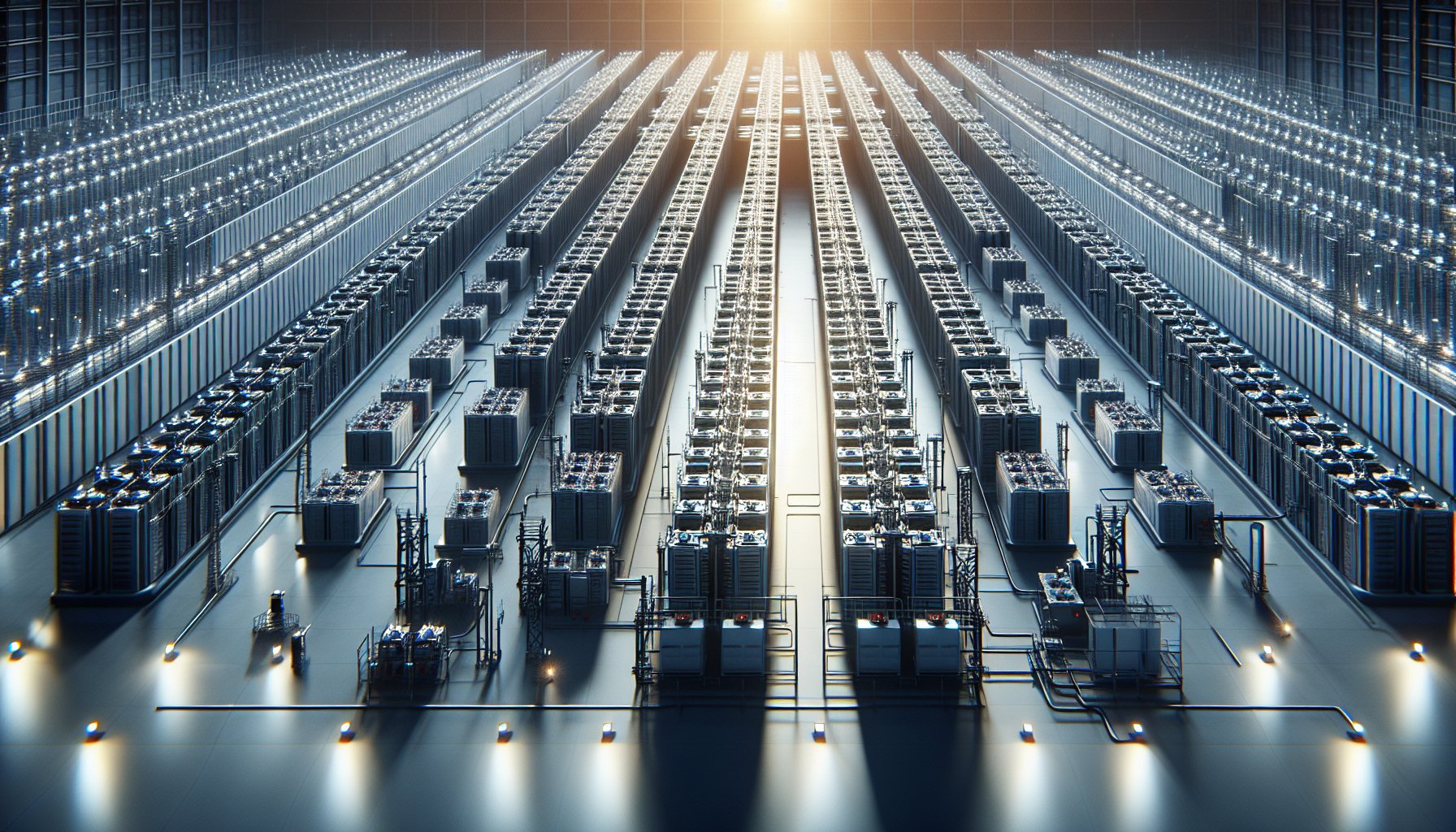
Surging Ahead: Texas Steals the Spotlight in Battery Boom
Picture the Texas grid humming under a relentless sun, where massive battery arrays now outmuscle California's long-held dominance. In February 2026, Texas hit 14,984 megawatts of battery storage capacity, edging out California's 14,365 megawatts, as reported by Inside Climate News. This shift caps a banner year for the U.S., with 18,925 megawatts added nationwide—a 52% jump fueled by plummeting lithium-ion prices and the urgent need to backstop wind and solar power.
Globally, the momentum is just as fierce. Huawei Digital Power's "Top 10 Trends of Smart PV & ESS 2026" report spotlights grid-forming inverters and AI integration as game-changers, speeding up the rollout of photovoltaic, wind, and energy storage systems. RenewablesNow covered the details, noting how these trends are reshaping grids worldwide. Yet amid the hype, real-world demands—like stabilizing intermittent renewables—are driving this explosive growth.
The U.S. boom ties directly to policy wins, including falling costs and incentives that make batteries a no-brainer for grid support. Still, it's not all smooth sailing; as storage scales, questions about longevity and reliability loom large.
Innovations Ignite the Next Wave of Storage Tech
The Department of Energy isn't sitting idle. On December 19, 2024, it poured $25 million into 11 projects aimed at revolutionizing battery manufacturing, according to DOE announcements. Earlier that year, on August 13, the agency unveiled the Grid Storage Launchpad at Pacific Northwest National Laboratory—a sprawling 93,000-square-foot hub dedicated to pushing energy storage boundaries.
Beyond lithium-ion, bold alternatives are emerging. Take Fourth Power, an MIT spinout that's cranking up thermal batteries to scorching temperatures of 1,900 to 2,400 degrees Celsius. Using thermophotovoltaic modules, these systems promise flexible, cost-effective grid responses, as detailed in MIT News from March 18, 2026. The company claims massive savings on plant infrastructure, but it's still early days.
Recharge News has highlighted other contenders, like superheated bricks for long-duration storage, drawing big-name backers such as Microsoft and Saudi Aramco. These innovations could diversify the field, especially as batteries now eclipse pumped hydro—with 22,224 megawatts in capacity—marking a seismic shift from legacy tech whose last big U.S. project wrapped in 2002.
Key milestones underscore the progress: California's batteries once delivered 43% of evening grid power, a record that hints at ditching dirty peaking plants, per Inside Climate News. Texas's capacity lead reflects its solar and wind frenzy, while COP28's global push to triple renewables puts storage front and center for tackling intermittency.
Confronting the Fade: Degradation and Grid Realities
Optimism crashed into hard truths at the 2026 U.S. Energy Storage Summit. Experts warned that typical grid-scale batteries could lose 20-30% of their capacity in the first decade, as quoted in Energy-Storage.News. This "wall of operational reality" has developers rethinking strategies, from overbuilding by 15-20% to phased capacity additions—all made feasible by dropping lithium costs and the U.S. Investment Tax Credit.
In California, batteries have proven their mettle, shouldering 43% of the grid on a peak evening and easing reliance on fossil fuels, Inside Climate News observed. Texas leads in sheer capacity, but California's output records show what's possible when storage steps up during crunch times. Still, without robust long-term data, these projections hinge on models, leaving room for nasty surprises.
Globally, Huawei's white paper pushes all-scenario grid-forming for stability and AI for smarter operations, per RenewablesNow. But challenges persist, like bridging cost gaps between lithium-ion and thermal upstarts. Other spots on the map, from Pacific Energy's 81-megawatt-hour setups in Australia to Hithium's fire-tested expansions in Chile, highlight a patchwork of progress and pitfalls.
Betting on Batteries: A Cautious Path Forward
The outlook screams growth. An analyst told Inside Climate News that falling prices, Inflation Reduction Act perks, and the phase-out of gas peakers create a "very, very strong case" for storage over the next five years. Huawei envisions AI optimization and grid-forming tech turbocharging renewables, while DOE's Energy Storage Grand Challenge hunts for long-duration fixes in a heating global race.
Diverse options like Fourth Power's high-heat systems could shake up portfolios, but commercialization hurdles loom—MIT spinouts have a habit of stumbling on manufacturing scales. Superheated bricks might gain ground with heavyweight investors, yet proven lithium-ion remains the safe bet for now.
Here's our unfiltered take: This battery surge is thrilling, but ignoring that 20-30% degradation hit spells expensive headaches down the line, especially as tax credits wane. Developers, take note—overbuild smartly or risk retrofits. Policymakers should steer more DOE cash toward battle-tested long-duration alternatives to break our lithium dependency before it bites. The grid's future hangs on getting this right, and we're watching closely.